
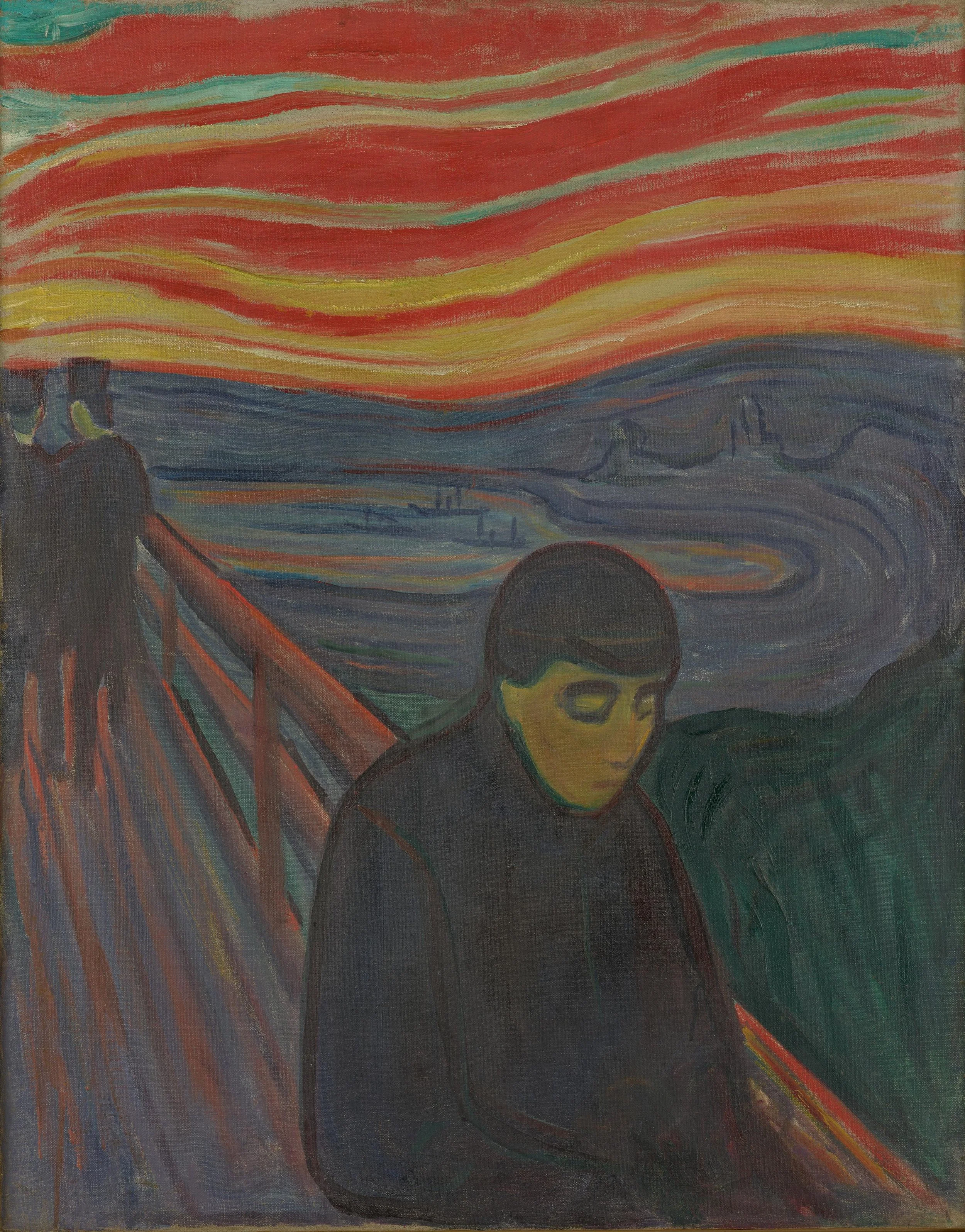
“I just don’t feel like myself ”
Counselling & Psychotherapy in Bromley, Beckenham & online
How can I help?
Many people will arrive initially at the door of a therapist saying something like:
“I just don’t feel like myself”.
This phrase captures much of what we need to begin a therapeutic journey: what therapy is and how it can help.
It hints at hope, suggesting that at some point you did feel like yourself — but something has changed, and you may not know what. The word “I” makes this about you and your desire for your pain and struggle to be acknowledged. It reveals an awareness of feelings, even if you cannot yet name or understand them.
Perhaps the most powerful and hopeful element lies in the unconscious desire to ask why?
Finding your way here and beginning to ask that question takes courage. Therapy offers a space to explore it with someone who can meet your fears while encouraging curiosity with an open mind and heart. Therapy does not seek to make you someone different, but to help you find a path back to yourself — towards greater coherence, contentment, and the authentic parts of yourself that may have been forgotten or lost.
In practical terms, therapy involves meeting weekly and talking confidentially about whatever is on your mind, exploring patterns, emotions, experiences, dreams, and the symbolic clues they may contain.
Over time, therapy brings meaningful changes in how people experience themselves and their relationships. They often feel more confident, content and relaxed, less constrained by fear of judgement, and freer to act authentically. Relationships become more fulfilling, with a growing sense of self-belief, ease and a positive, forward-moving attitude towards life.
If you are ready to get started, or simply want to learn more, please reach out via phone, email or the enquiry button to get in touch.
Many of our experiences hark back to the loss of the ultimate mother-child connection. Although we do not remember it - we also never forget it.
Judith Viorst, Necessary Losses (1986)
What can I help with?
I practice Relational Psychotherapy, an approach shaped by psychodynamic ideas that have developed over more than a century. It is helpful for a wide range of emotional and psychological difficulties such as:-
Anxiety, panic or persistent worry
Depression, emptiness or loss of meaning
Low self-esteem and harsh self-criticism
Trauma and difficult experiences
Relationship, intimacy or trust difficulties
Destructive or repeating patterns
Overwhelming emotions, anger, shame or guilt
Feeling stuck, disconnected or “not yourself”
Difficulties with identity or relationships
Grief, loss and major life changes
This style of therapy can be particularly helpful when difficulties feel complex, longstanding, or hard to understand. You do not need to know exactly what is wrong — together, we can become curious about what is happening and why, exploring how past experiences may shape the way you feel and relate today.

About me
Nick How, MA-Psychodynamic Psychotherapy & Counselling, MNCPS
I am a fully qualified psychotherapist, working within the Bromley, Beckenham, Orpington area of Kent and online. I work professionaly with adults in private practice and the charitable sector, supporting a diverse range of clients and organisations. I have a particular interest in supporting parents of children with life limiting medical conditions and other acute presentations where third party support is vital to enable families to navigate such devastating life events. I continue to take regular courses and lectures to expand my knowledge, capability and own practice and work within the ethics and professional guidelines of my membership body - The National Counselling & Psychotherapy Society (NCPS).
How and where I work
I can work both open ended and short-term, and the best approaches will be discussed together & agreed before any work starts. Research supports the power of face to face work in therapy, but online format can be agreed on a case by case basis. I will always make an initial assesment, where both you and I can take a short time to understand each other, what you would like to bring, and your hopes for working together. Its important that both of us feel able to work with each other - and that starts from the first contact. If either of us are not sure if this type of therapy is right for you, then there is no charge for the initial assemment.
Costs & Duration
I curently have availability on Mondays, 10am-5pm. Sessions are 1hr long and chargeable at £95 for both face to face and online.
How to find me
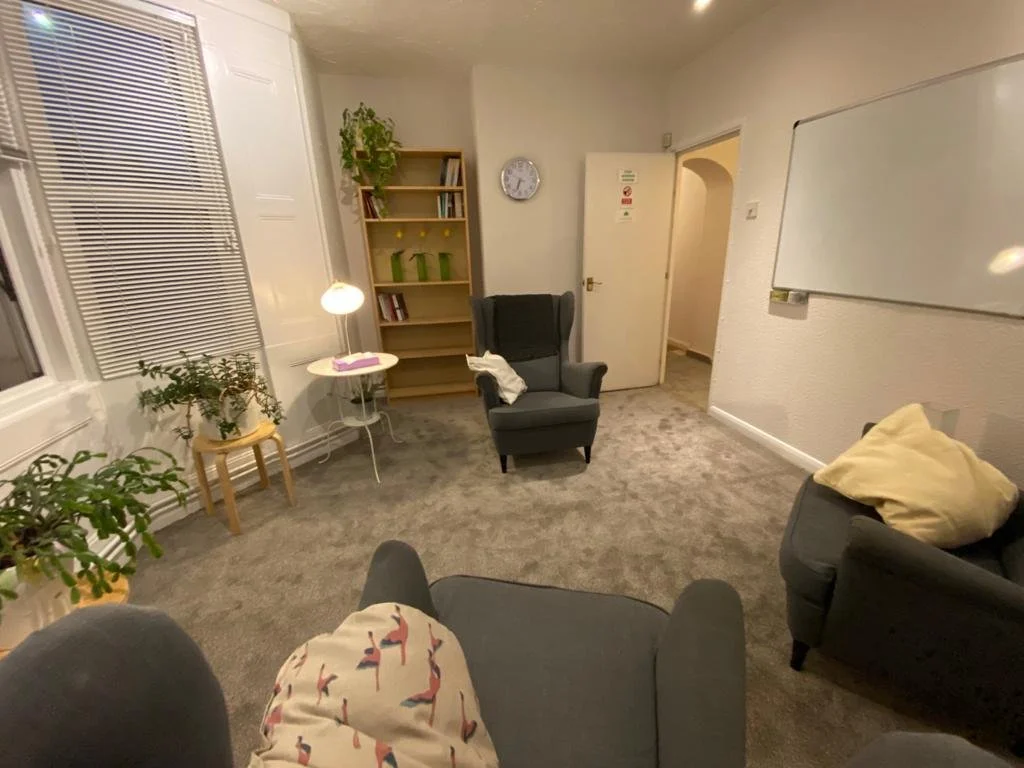
I work from a comfortable, private and relaxing space located in central Bromley, close to both Bromley North and South train stations (18 mins fast service from London Victoria) with parking nearby.
Frequently Asked Questions
-
At its simplest, psychotherapy seeks to alleviate emotional and psychological suffering — to ease the pain of symptoms while becoming curious about the experiences, thoughts and feelings that may lie beneath them.
The type of therapy I practice begins with the belief that there are parts of our emotional lives that we do not always fully know or understand. Sometimes, thoughts and feelings can become too painful, frightening, confusing, or difficult to hold in mind. Often, without consciously choosing to do so, we find ways of putting these experiences somewhere beyond our immediate awareness.
But what is out of sight is not necessarily gone. The feelings we cannot easily acknowledge can still shape the way we see ourselves, the choices we make, and the relationships we form. They may leave us feeling anxious, low, disconnected, or somehow unfamiliar to ourselves — with that lingering sense that something has changed, even when we cannot yet understand why.
Psychodynamic psychotherapy offers a space in which we can begin to become curious about these hidden parts of ourselves. Together, we can gently explore the thoughts, feelings, experiences and relationships that have shaped who you are and how you find yourself in the world today. Not to judge them, and not to force them away, but to understand them.
And perhaps, through that understanding, what once felt confusing can begin to make sense. What has been pushed aside can gradually find its place. And the parts of yourself that have felt forgotten, lost, or left behind may slowly become available to you once again — not trying to make you someone different, but to feel more authentically yourself.
This differs somewhat from approaches such as Cognitive Behavioural Therapy (CBT), which often focus more directly on identifying and changing patterns of thought and behaviour in the present. While this can be enormously helpful, psychodynamic and relational psychotherapy is also interested in understanding where these patterns may have come from, what they mean, and how they have developed through our experiences and relationships. The aim is not simply to change a pattern, but to understand it — and through that understanding, create the possibility for deeper and more lasting change.
-
There is no fixed answer to this question. How long therapy takes depends on what you bring, how long it has been part of your life, and what you hope to achieve. It would be unfair to expect something that may have troubled you for years to be fully resolved overnight.
Many people do, however, find that they naturally take breaks from therapy over time — allowing changes to settle and take effect, or sometimes simply taking a rest.
I will always offer an honest opinion about whether a shorter- or longer-term approach is likely to be most helpful. I will also be open about whether the type of therapy I offer is a good fit for what you are bringing, or whether a referral to someone else would be more beneficial.
-
After getting in touch with me by email, phone or online, I will advise you of an available time slot. If thats workable then I will arrange a short 15min call to introduce ourselves, understand what it is you feel you need help with and your expectations for therapy.
There is no requirement to know what’s wrong, that’s often part of the initial work and can change over the journey.
I look forward to hearing your story.
-
Therapy is not an emergency service, and there may be times when thoughts or feelings become difficult to manage. If you feel that you need immediate support, please do not wait to for your therapist to be avialable.
Emergency help is available, and reaching out for additional support is not a failure — these services exist precisely for times when you need more immediate care. If you are concerned about your immediate safety, or the safety of someone else, please contact the appropriate emergency or crisis service.
If you feel you may act on suicidal thoughts, or you are in immediate danger, please call 999 or go to your nearest A&E department. If possible, ask someone you trust to stay with you and help you get there safely. A mental health emergency should be treated as seriously as any other medical emergency.
If you are experiencing a mental health crisis but it is not an immediate emergency, call NHS 111 and select the mental health option. This provides access to urgent mental health support 24 hours a day, 7 days a week. Calls to NHS 111 can also be made on your behalf.
If you need someone to talk to:
· Samaritans – 116 123 Free, confidential support, day or night, 365 days a year.
· Shout – text SHOUT to 85258 A free, confidential 24/7 text support service.
· You can also contact your GP for support, particularly if your mental health has been deteriorating.